
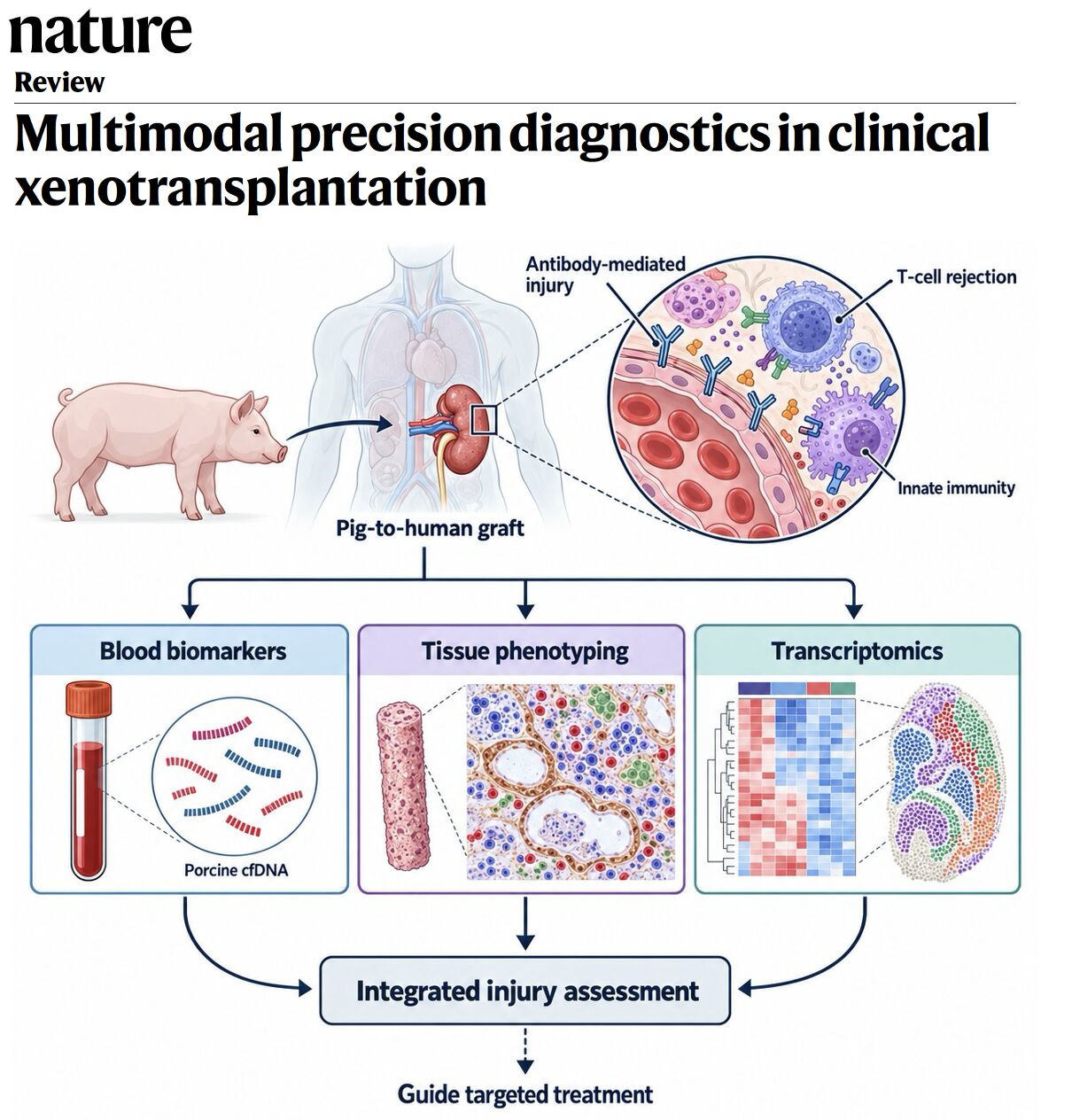
The first transplants of genetically modified porcine organs into humans have overcome a major barrier: hyperacute rejection. However, a central challenge remains: identifying and understanding the immune-mediated injuries that subsequently threaten the survival of the graft.
In a review published in Nature, Alexandre Loupy and his co-authors propose an approach based on multimodal precision diagnostics.
➡️ A key insight is that a graft may continue to function even while sustaining immune-mediated damage that remains invisible to conventional diagnostic methods.
The approach involves integrating multiple sources of information:
- Analysis of biopsies and immune cells.
- Molecular profiling of tissues, notably through transcriptomics.
- Circulating biomarkers, including cell-free DNA originating from the graft.
The goal: to detect injuries earlier, identify the underlying mechanisms, and guide personalized treatment. Such insights could also inform future genetic modifications of porcine organs.
This strategy still requires validation and standardization within clinical trials. It paves the way for advancing xenotransplantation toward a safe and sustainable therapeutic option, helping to address the ongoing organ shortage.
This contribution highlights the vital role of precision diagnostics in the future of transplantation.
Learn more: Nature – “Multimodal precision diagnostics in clinical xenotransplantation“